


Sound You Can Feel: How Mobile Slot Vibrations Change the Perception of Wins and Losses
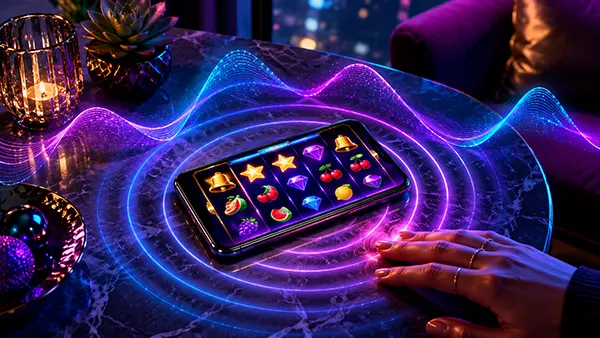
A mobile slot no longer communicates through the screen and speakers alone. On a modern smartphone, a reel stop can arrive as a visual pause, a short musical accent and a precise pulse in the player’s hand. When these signals land together, the result can feel more definite and more important than the same outcome shown silently. That matters because slot play contains many events that are easy to misread emotionally: a small return may still leave the player down overall, while a near miss can look and feel unusually close to success despite being a loss. As of 2026, current mobile development tools make it practical to coordinate sound and tactile feedback with considerable precision. The important question is therefore not simply whether vibration makes a game more engaging, but how it changes the way players classify, remember and react to wins, losses and almost-winning combinations.
When a Slot Result Becomes a Multisensory Event
Every spin produces several layers of information. The symbols show what happened, the balance reveals the financial result, and the audio track tells the player how the game wants that result to feel. Haptic feedback adds a further layer by turning an on-screen event into a physical sensation. A brief tap can mark the press of the spin button, a sequence of pulses can follow the reels as they stop, and a stronger pattern can accompany a bonus trigger or a larger payout. None of these vibrations changes the random outcome or the return to player. Their influence lies in presentation. Touch is immediate, difficult to ignore and closely linked to the action of holding the phone. When a pulse arrives at the exact moment a winning line lights up, the event may feel less like information displayed by software and more like something that has physically happened to the player.
The effect becomes stronger when music, short sounds and vibration share the same rhythm. A rising tone can create anticipation before the final reel settles, while a sharp chime and a compact tactile pulse can mark the outcome. This coordination gives the event a beginning, a peak and an ending, even if the financial value is small. Designers often call this kind of response audio-haptic feedback because the sound and touch are planned as one sequence rather than added separately. The phone does not need to shake forcefully for the cue to be noticeable. A clean, well-timed pulse may carry more meaning than a long buzz because the player can associate it with a specific moment. In practical terms, timing gives vibration its vocabulary: one tap can confirm an input, two taps can signal a feature, and a short build-up can create suspense before the result appears.
Modern mobile tools support this coordination more reliably than older vibration systems did. Apple’s Core Haptics allows developers to combine transient taps, continuous sensations and audio resources in timed patterns, while current Android tools provide predefined effects, composable primitives and device-aware waveform controls. Android 16 also introduced envelope-based options that can vary intensity and, on supported hardware, frequency over time. These capabilities do not make every handset feel identical. Motors differ in response speed, strength and sharpness, and operating systems may reduce or interrupt effects because of user settings, battery conditions or notifications. Good mobile design therefore includes fallbacks and checks what the device can actually reproduce. From the player’s perspective, this explains why the same slot may feel crisp on one phone, soft on another and almost silent in the hand when vibration has been disabled.
Why Timing Matters More Than Raw Strength
A tactile cue is most convincing when it arrives in close agreement with the sound and animation it represents. If the reels stop visually but the phone vibrates noticeably later, the effect feels like a notification rather than part of the spin. If the pulse arrives too early, it can reveal or imply an outcome before the screen has finished presenting it. Precise timing helps the brain treat separate sensory signals as one event. This does not require laboratory-level perfection, but delays should be small and consistent enough that the player does not consciously notice them. The same principle applies to rhythm. A sequence that mirrors three reel stops can make each stop feel distinct, while a single long vibration may blur the whole result into one undifferentiated buzz. For this reason, short tactile accents are often more informative and less tiring than repeated heavy patterns during every stage of play.
Intensity still matters, but stronger is not automatically better. A forceful vibration can make an event seem urgent, important or final, which may be suitable for a security warning but excessive for an ordinary spin. Repeated strong pulses can also become irritating, consume more battery and reduce the contrast between routine actions and genuinely significant events. If every small payout receives the same physical emphasis as a rare feature, the feedback stops helping the player understand the game and starts flattening all positive-looking events into one emotional category. Subtle differences can work better when they are large enough to be perceived on the target device. Developers must test these differences on real phones rather than assuming that a pattern designed on one model will transfer neatly to another. A carefully judged light tap can communicate confirmation without turning a routine result into a celebration.
How the phone is held also changes what the player feels. A vibration is clearer in a firm one-handed grip than when the device rests on a soft surface, sits loosely between two hands or is used while walking. Cases can dampen the sensation, and individual sensitivity varies with age, attention and physical context. Sound may be muted in public, leaving vibration as the main non-visual cue, while headphones can make the audio component much more prominent. These variations mean that a haptic pattern is never experienced in isolation. Its meaning depends on the visual result, the sound level, the player’s grip and the surrounding environment. Responsible testing should therefore include quiet rooms, noisy settings, headphones, muted audio, different cases and common accessibility settings. A cue that seems modest at a desk may feel much more insistent when the phone is held tightly during repeated play.
How Haptics Can Reframe Small Payouts and Near Misses
One of the clearest risks in slot presentation appears when a spin returns some money but less than the amount staked. The screen may show animated coins, highlight several lines and play a cheerful sound even though the player’s balance has fallen. Researchers commonly describe these outcomes as losses disguised as wins. Studies of multiline slot play have found that celebratory sound can make such results more likely to be counted or remembered as wins. Haptic feedback could add another layer of emphasis because the return is not only seen and heard but also felt. Direct research that isolates smartphone vibration in real-money slot outcomes remains limited, so it would be wrong to claim a measured effect of a specific size. The reasonable concern is based on combined evidence: sound can distort the appraisal of partial returns, and well-designed phone haptics can increase meaning, enjoyment and immersion in games.
A small return can therefore create two competing messages. The balance says that the player lost money on the spin, while the animation, sound and vibration may say that something positive has happened. People do not always calculate the net result instantly, especially during rapid sequences of play. A brief tactile reward can strengthen the more vivid message and make the less noticeable balance change easier to overlook. This is not the same as changing the displayed numbers, but presentation can influence which numbers receive attention. Clear design should place the net result at the centre of the outcome and reserve distinctly celebratory feedback for genuine gains above the stake. If a player stakes £1 and receives 40p, the interface should not use the same musical and tactile signature as it would for a profitable result. The physical cue should support accurate understanding, not compete with it.
Near misses create a related problem. A reel combination that stops one symbol away from a prize is mathematically a loss, yet it can produce a strong feeling of having come close. Research has linked near-miss presentation with erroneous beliefs, heightened attention and, in some circumstances, a greater desire to continue. The result can feel particularly persuasive when the final reel slows down, suspenseful music rises and the phone produces a pulse just before the decisive symbol passes the payline. The vibration may give the sequence a bodily sense of momentum, even though the player has no influence over a random result. Again, there is not enough direct evidence to state that haptics alone cause longer sessions or greater losses. What can be said is that tactile cues increase the salience of selected moments, and near misses are already highly salient outcomes that deserve careful, non-celebratory treatment.
The Difference Between Information and Celebration
Haptic feedback can serve a legitimate informational purpose. A light tap can confirm that the spin button was pressed, prevent repeated inputs caused by uncertainty and support players who use the phone with sound off. A different neutral pattern can indicate that a menu opened, a limit was reached or an action requires attention. These cues help the player operate the game without implying that an outcome is favourable. Celebration is different because it adds emotional value: rising intensity, rhythmic pulses, fanfare-like sound and prolonged animation frame the event as an achievement. The distinction is not always obvious when each element is viewed alone. A single pulse may be neutral, but the same pulse combined with bright effects and triumphant music can become part of a reward sequence. Evaluation should therefore consider the complete sensory package rather than judging vibration, sound and graphics separately.
British rules provide a useful benchmark for this distinction. The UK Gambling Commission’s remote technical standards prohibit celebrating a return that is less than or equal to the total stake. The implementation guidance refers specifically to auditory and visual effects associated with a win, reflecting concerns about false-win presentation. Haptic feedback is not named in that wording, but its growing use creates an obvious design question: if a vibration is deliberately synchronised with celebratory sound and imagery, it may contribute to the same misleading impression. Operators and studios should not treat touch as a loophole simply because older rules were written around what players could see and hear. A safer interpretation is to apply the principle across all sensory feedback. Any cue attached to a non-profitable return should be neutral, proportionate and clearly secondary to the actual financial result.
Near misses require an equally careful approach because they are not partial wins; they are complete losses. A neutral reel-stop pulse may be acceptable if it occurs consistently on every spin and carries no special emotional meaning. A rising pattern reserved for two bonus symbols followed by a miss is harder to justify because it singles out the near miss and can make it feel like progress. The safest design does not punish the player with unpleasant vibration, but it also does not reward a loss with a tactile flourish. The result should be shown promptly, the balance should update clearly, and the next action should remain under the player’s control. Where suspense is part of the game’s presentation, it should not imply skill, influence or improved odds. Random outcomes remain random, and sensory staging should never suggest that a near miss has made the next win more likely.
Designing Haptics That Inform Without Manipulating
A responsible haptic system begins with a simple rule: the strength and character of the feedback should match the information value of the event, not the commercial value of keeping the player engaged. Input confirmation should be brief and consistent. Warnings, deposit-limit messages and session reminders should be clear enough to notice without being confused with reward cues. Outcome feedback should distinguish genuine profit from a return below stake, and ordinary losses should not receive suspense patterns that make them feel like unfinished wins. Designers can document every tactile event in the game and ask what a player is likely to infer from it. If the intended meaning is “your tap was registered”, the cue should not sound or feel like “you achieved something”. This review is more reliable when it includes compliance specialists, accessibility testers and people who did not create the original effect.
Player control is equally important. Vibration should be easy to reduce or switch off without disabling essential information, and the setting should be remembered between sessions. Some players find repeated haptics distracting, uncomfortable or physically unpleasant, while others rely on them when audio is muted. An all-or-nothing switch is better than no control, but separate options can be more useful: interface feedback, game-event vibration and alerts do not serve the same purpose. Essential warnings should still appear clearly on screen if touch is disabled. Developers should also respect system-level accessibility and haptic preferences rather than attempting to override them. Good design assumes that silence in the hand is a valid choice, not a degraded version of the game. A player should be able to understand stakes, returns, balances and limits accurately through the visual interface alone.
Device variation must be treated as a safety issue as well as a technical one. A pattern that feels mild on a weaker motor may become striking on a newer actuator, while an elaborate sequence may collapse into a rough buzz on older hardware. Both Apple and Android provide ways to check capabilities, but developers still need practical testing across different models and operating-system versions. Fallbacks should preserve meaning rather than merely approximate intensity. If a device cannot reproduce a nuanced pattern, a simple neutral tap is usually safer than a long generic vibration. Testing should also measure synchronisation with audio, battery impact, interruptions and behaviour when notifications arrive. The aim is not to make every phone feel identical; that is unrealistic. The aim is to ensure that no supported device turns a modest cue into an unexpectedly forceful reward signal.
What Players, Developers and Reviewers Should Check
Players can judge haptic design by paying attention to when the phone vibrates and what the balance shows at the same moment. If a small return triggers strong pulses and cheerful sound even though the total balance falls, the feedback is presenting the event more positively than the numbers justify. The same warning sign appears when near misses receive a special build-up that ordinary losses do not. Turning vibration off for a session can make these differences easier to notice because the result is assessed through symbols, stake and return rather than physical emphasis. It is also worth checking whether the game provides separate sound and vibration controls and whether responsible-gambling messages remain visible when both are muted. Sensory effects should never replace basic information about cost, outcome and time spent.
Developers and operators should test comprehension, not only enjoyment. A useful study asks participants to classify each outcome as a profit, break-even result or loss, then compares answers with and without sound and haptics. It should include small returns, genuine wins, standard losses and several types of near miss. Researchers can also measure recall, confidence and the urge to continue, while avoiding claims that go beyond the sample. Testing should cover people with different levels of gambling experience and different tactile sensitivity. The most important warning is a gap between emotional reaction and financial understanding: if participants feel they won but cannot accurately state the net result, the sensory design is too persuasive. Independent review is especially valuable because teams accustomed to a game may no longer notice how forceful its repeated cues have become.
Reviewers, regulators and consumer researchers should describe haptics as part of the game’s outcome communication rather than as a minor phone feature. A proper assessment records which events trigger vibration, whether the pattern changes with payout size, how partial returns are treated and whether near misses receive unique cues. It should also note the available controls, device differences and the clarity of the balance update. The evidence available in 2026 supports a cautious position: synchronised touch can make game events feel more meaningful, while slot research already shows that celebratory presentation can distort the perception of partial wins and near misses. What remains uncertain is the exact independent contribution of smartphone vibration in real-money play. That gap calls for transparent testing and restrained design, not for assuming that tactile feedback is harmless simply because it does not alter the mathematics of the spin.